Reviewing Christmas Highland Cows Clipart P4
As a designer who spends more time staring at stitch simulations than I do sleeping, I have learned that not every cute graphic translates well to thread. We have all been there: you find an adorable illustration, imagine it perfectly centered on a holiday sweatshirt, and then watch in horror as the machine turns fine details into a tangled bird’s nest. This is why I approach new assets with a critical eye. Recently, I spent some time evaluating Christmas Highland Cows Clipart P4 to see if it holds up under the needle. My goal was not just to admire the art, but to determine if it is a viable asset for real-world embroidery projects, from custom client orders to my own small shop inventory.
First Impressions and Visual Personality
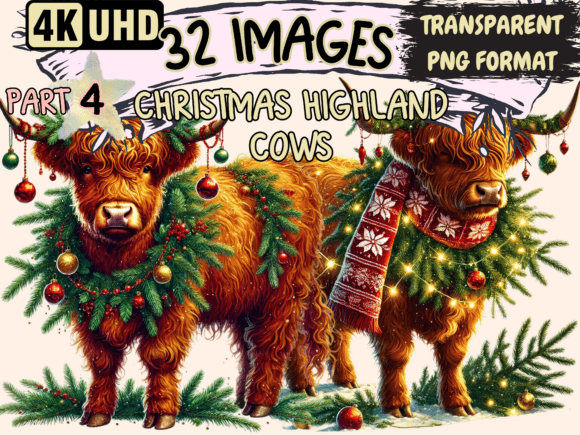
The first thing that strikes you about Christmas Highland Cows Clipart P4 is its charm. It captures that specific cozy, rustic aesthetic that dominates the winter holiday market. The subject matter—Highland cows—is already a perennial favorite in the crafting world, but adding Christmas elements gives it seasonal urgency. Visually, the design feels balanced. It does not rely on overly complex shading that would require thousands of stitches to replicate; instead, it leans into bold shapes and clear lines. For an embroidery designer, this is a relief. Complex gradients are the enemy of clean stitching, especially on textured fabrics like terry cloth or fleece.
The mood here is playful yet sophisticated enough for boutique branding. It avoids the cluttered look of some holiday designs, which often cram too many elements into a small space. This clarity is crucial. When I look at this as part of the broader Illustrations category, it stands out because it respects the limitations of the medium. It looks like it was created with an understanding that thread has thickness and direction, not just color.
Real-World Application: The Holiday Tote Test
To truly test a design, you have to imagine it on a product. I visualized using Christmas Highland Cows Clipart P4 on a heavy canvas tote bag. This is a staple item for any Etsy seller or craft fair vendor during the fourth quarter. The design’s layout works exceptionally well here. Because the central figure is distinct, it reads clearly even from a distance. If you were to place this on a tote bag design, the contrast between the thread and the natural canvas would pop, provided you choose your thread colors wisely.
I also considered this for sweatshirt embroidery. A crewneck hoodie in heather grey or forest green would provide a perfect backdrop. The key here is scale. Since Highland cows are inherently fluffy, the design likely utilizes fill stitch techniques to mimic fur texture. On a thick fabric like a sweatshirt, this adds a lovely tactile dimension. However, you must be mindful of the stitch density. If the design is too dense, it can cause the fabric to pucker, ruining the professional look of your handmade product. I recommend running a test stitch-out on scrap fabric identical to your final garment to check for pull.
Versatility Across Product Lines
Beyond apparel, this clipart has strong potential for home decor. Imagine it stitched onto a linen pillow cover for a farmhouse-style living room, or as a festive accent on kitchen towels. For baby embroidery, the soft, rounded features of the cow make it appealing for nursery items, though you would need to ensure the hoop size is appropriate for smaller garments like onesies. The design could also serve as a fantastic embroidered patch. Patches are trending, and a well-digitized Highland cow can be ironed onto jackets, hats, or backpacks, extending the life of the design beyond a single garment.
For those selling digital embroidery file packages, this type of design is a strong anchor piece. It appeals to multiple demographics: the modern crafter, the traditional homemaker, and the trendy apparel decorator. It fits seamlessly into collections focused on holiday embroidery or rustic farm themes.
Technical Considerations and Potential Pitfalls
While Christmas Highland Cows Clipart P4 is visually appealing, there are areas where caution is required. Any design with animal fur or holiday accessories like scarves and hats needs careful digitizing. If the original artwork relies on tiny details, these may get lost in translation. For instance, if the cow’s eyes or the pattern on a scarf are too small, they might become indistinguishable blobs when stitched. This is particularly true for small hoop sizes like 4x4 inches. Always check the recommended hoop size before purchasing or downloading.
Fabric choice plays a massive role in the final outcome. On stretchy fabrics like jersey knits, a heavy design can cause distortion. Using the correct stabilizer is non-negotiable. I always use a cut-away stabilizer for garments that will be washed frequently, ensuring the finished product maintains its shape. For woven fabrics like cotton or linen, a tear-away might suffice, but test first. Additionally, be cautious with dark fabrics. If the design includes light-colored threads for highlights, ensure your digitizing includes proper underlay stitches to prevent the dark fabric from showing through.
Another consideration is the use of satin stitch versus fill stitch. Satin stitches are beautiful for borders and text but can snag easily on items like baby clothes or pet accessories. If this design uses long satin runs for the cow’s horns or antlers, consider breaking them up or using a narrower width to enhance durability.
Enhancing Brand Value and Customer Trust
Using high-quality assets like Christmas Highland Cows Clipart P4 directly impacts your brand perception. Customers can tell the difference between a crisp, well-stitched design and one that is messy or poorly scaled. A clean embroidery project builds trust. It signals that you care about quality, which justifies higher price points for your custom apparel or personalized gift items. Furthermore, consistent use of cohesive design assets helps in building a recognizable brand identity. If your shop specializes in rustic holiday goods, this design fits that narrative perfectly.
For commercial embroidery clients, presenting a digital mockup can help close sales. Use the clipart to create realistic previews on various products. This allows customers to visualize the printed mockup or stitched result before committing. It reduces hesitation and increases conversion rates for your small shop product listings.
Practical Designer Notes for Best Results
Before you start stitching, take these practical steps to ensure success with Christmas Highland Cows Clipart P4:
- Test on Scrap Fabric: Never stitch directly on your final product without a test run. Check for thread breaks, tension issues, and registration accuracy.
- Check Thread Contrast: Ensure your thread colors contrast sufficiently with the fabric. A low-contrast combination can make the design look muddy from a distance.
- Review Stitch Density: If the design feels stiff after stitching, the density may be too high. Adjust your machine settings or choose a lighter weight fabric if possible.
- Confirm Licensing: Always verify the license terms. Can you use this for commercial embroidery? Are there limits on the number of physical items you can sell? Clarify this before listing items on Etsy or other platforms.
- Inspect Small Details: Zoom in on the digitized file. Look for unnecessary jump stitches or loose ends that might need trimming.
- Mockup in Black and White: Convert your preview to grayscale to check value contrast. If the design disappears in black and white, it lacks sufficient contrast for clear visibility.
In conclusion, Christmas Highland Cows Clipart P4 is a strong contender for your holiday design library. It balances aesthetic appeal with practical application, making it suitable for a wide range of embroidery project types. By paying attention to technical details like stabilizer choice and stitch density, you can transform this digital asset into a high-value finished product that delights customers and elevates your craft business.