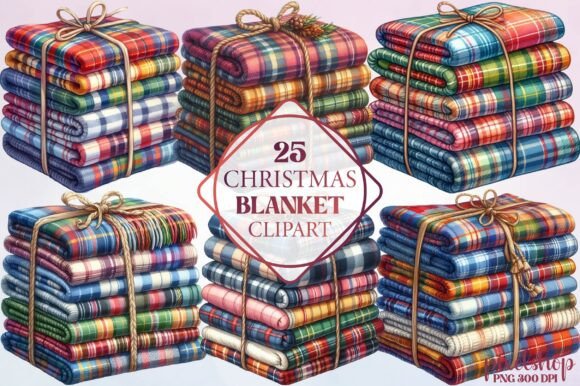
Reviewing Watercolor Christmas Blanket Clipart for Embroidery
As a designer who spends more time staring at stitch simulations than I care to admit, I have learned that not every pretty image translates well to thread. We often get swept up in the aesthetic of digital assets, forgetting that embroidery is a tactile, structural medium. Recently, I pulled the Watercolor Christmas Blanket Clipart into my workflow to evaluate its potential for upcoming holiday projects. This isn’t just about whether it looks cute on a screen; it is about whether it holds up under the needle, respects the fabric, and delivers value to the end customer.
The first impression of this asset is undeniably cozy. The watercolor style brings a softness that is often missing from rigid vector graphics. For those of us creating Illustrations for seasonal campaigns, this mood is critical. It evokes warmth, nostalgia, and the quiet comfort of the holidays. However, translating that watercolor bleed and soft edge into a machine embroidery design requires careful planning. If you are an Etsy seller or a small shop owner looking to expand your holiday catalog, understanding how this specific visual language interacts with thread is the difference between a bestseller and a returned item.
The Real-World Test: A Holiday Tote Bag Scenario
To give this review some weight, let’s look at a real-life application. I recently prepared a custom order for a boutique client who wanted a set of reusable gift totes. The goal was to create a handmade product that felt elevated yet approachable. I chose the Watercolor Christmas Blanket Clipart as the central motif for a tote bag design. The concept was simple: a neutral canvas bag with the soft, festive imagery stitched prominently on the front.
Working with watercolor-inspired assets in embroidery is tricky. You cannot simply auto-digitize a PNG and expect magic. The beauty of watercolor lies in its transparency and gradient, which do not exist in thread. To make this work, I had to think in terms of thread colors and stitch density. I opted for a mix of fill stitch for the broader areas of color and running stitch for the delicate outlines. The result was surprisingly effective. The soft edges of the clipart translated into a gentle, textured look that mimicked the original artistic intent without looking pixelated or overly dense.
For a craft business, this kind of adaptability is gold. It means you can use one strong visual asset across multiple products. While the tote bag was the primary test, I could easily see this design working on a sweatshirt embroidery project. The relaxed vibe of the watercolor style pairs perfectly with the casual nature of fleece or cotton blends. It avoids the stiff, corporate look that sometimes plagues holiday merch, offering instead a personal, artisanal feel that customers crave in a personalized gift.
Navigating Fabric and Hoop Constraints
While the aesthetic is strong, we must discuss where this design demands caution. Embroidery is physical. It pulls, it puckers, and it adds weight. The Watercolor Christmas Blanket Clipart features soft, blended areas that might tempt you to use high-density stitching to capture the detail. Resist this urge. High stitch density on thin or stretchy fabrics is a recipe for disaster.
If you are applying this to a baby embroidery item, such as a onesie or a soft blanket, you must prioritize comfort. Babies have sensitive skin, and a dense block of thread can feel scratchy and heavy. In these cases, consider simplifying the design or using an applique design technique. By cutting fabric shapes and stitching them down with a satin stitch border, you reduce the amount of thread on the garment while maintaining the visual impact of the clipart. This also helps preserve the soft drape of the fabric, which is essential for baby items and lightweight custom apparel.
Another critical factor is the hoop size. Watercolor designs often rely on composition and negative space. If you shrink this design too much to fit a small hoop, such as on a cap or a pocket, you will lose the nuance that makes it special. The subtle gradients will merge into a muddy blob. Always check the minimum recommended size for your embroidery file. If the details are too fine for a small area, it is better to choose a simpler element from the set or reserve the full design for larger surfaces like pillow covers, aprons, or wall hangings.
Dark fabrics present another challenge. Watercolor art usually relies on light passing through layers. On black or navy fabric, you cannot replicate this transparency. You will need to lay down a white or light-colored underlay to ensure the thread colors pop. Without this step, your vibrant reds and greens will look dull and muted. Always run a test stitch-out on scrap fabric that matches your final product. This simple step saves hours of frustration and prevents wasted materials.
Commercial Value and Brand Consistency
From a business perspective, the Watercolor Christmas Blanket Clipart offers significant value if used correctly. In a saturated market, standing out is difficult. Many sellers use the same generic snowflakes and trees. Using a distinct, artistic style like watercolor helps build brand recognition. It signals to the buyer that you care about design quality and attention to detail. This builds trust, which is crucial for commercial embroidery and online sales.
When creating printable mockup images for your online store, this design shines. The soft, artistic look photographs beautifully. It allows you to create lifestyle images that feel warm and inviting, increasing buyer engagement. However, remember that what looks good in a photo must also perform in real life. Ensure that your finished product matches the promise of your photos. If the stitching is messy or the fabric is puckered, no amount of nice photography will save the sale.
For digital embroidery file sellers, licensing is key. Before you sell items made with this clipart, confirm the license terms. Some assets are for personal use only, while others allow commercial sales. Knowing this upfront protects your business from legal issues. If you are creating design assets for other makers, ensure your digitizing respects the original artist’s intent while optimizing for machine efficiency.
Practical Designer Notes for Success
To get the most out of the Watercolor Christmas Blanket Clipart, keep these practical tips in mind:
- Test on Scrap Fabric: Always stitch a sample on the actual fabric you plan to use. Check for puckering and thread breaks.
- Check Stabilizer: Use the right stabilizer for your fabric type. Cut-away stabilizer is often best for stretchy knits, while tear-away works for woven cottons.
- Contrast Matters: Ensure your thread colors contrast sufficiently with the fabric. Low contrast can make the design disappear from a distance.
- Simplify for Small Hoops: If stitching on caps or small patches, reduce the complexity of the design to maintain clarity.
- Inspect Details: Zoom in on your digitizing software. Look for stray stitches or unnecessary jumps that can be trimmed or edited out.
- Mockup in Black and White: Convert your design to grayscale to check value contrast. If it looks flat in black and white, it may lack definition in color.
In conclusion, the Watercolor Christmas Blanket Clipart is a versatile and charming asset for the holiday season. It bridges the gap between digital art and tactile craft, offering a unique aesthetic for holiday embroidery projects. Whether you are making a custom apparel line, a set of embroidered patch gifts, or decor for your home, this design can elevate your work. Just remember to respect the limitations of the medium. Plan your stitches, choose your fabrics wisely, and always prioritize the quality of the finished piece. When done right, the result is a beautiful, professional product that customers will cherish.